Most 4-year-olds are not yet ready for kindergarten – and that is completely normal. Kindergarten readiness is less about what a child knows and more about whether they are developing the social, emotional, and early academic skills that make learning feel possible. The worry that your child is "behind" often says more about the pressure parents feel than about where a child actually stands developmentally.
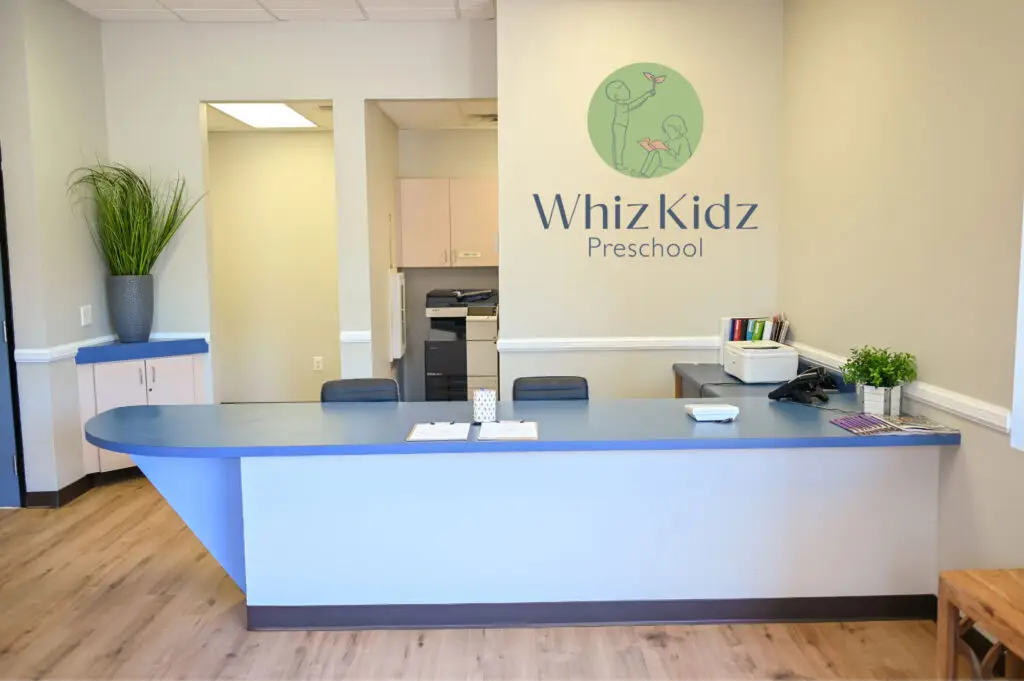
Whiz Kidz Preschool works with Phoenix families navigating exactly this question every day. The school's accredited STEM and school readiness curriculum is built around whole-child development – supporting children's confidence, curiosity, and foundational skills at the pace that is right for them, not the pace that feels urgent to adults.
What Does Kindergarten Readiness Actually Look Like at Age 4?
Kindergarten readiness is not about reading chapter books or memorizing math facts. It is a combination of skills that develop gradually across the preschool years, and most of them are social and emotional before they are academic.
At Whiz Kidz, families describe watching that development happen in real time. One parent whose daughters, ages 2 and 4, enrolled at Whiz Kidz shared what the experience has been like: the staff is warm, dedicated, and genuinely passionate about nurturing each child's growth, and the activities are thoughtfully designed to spark curiosity and build skills through creative play, early learning programs, and social development. Her daughter comes home every day eager to talk about what she has learned, and the family has watched her confidence grow steadily. That kind of daily enthusiasm is one of the clearest signs that a child is building readiness the right way – through belonging and engagement, not pressure.
Skills that genuinely signal readiness include:
- Following multi-step directions – A child who can hear "put your shoes on, grab your backpack, and stand by the door" and do all three is showing the working memory and focus that kindergarten depends on.
- Recognizing letters and numbers – Familiarity with the alphabet and counting up to 20 are meaningful early literacy and numeracy markers, consistent with what a kindergarten readiness checklist from the Arkansas Department of Education identifies as school-entry indicators.
- Managing emotions with some support – Children who can name a feeling and recover from frustration with a caring adult nearby are far more classroom-ready than children who can recite facts but fall apart under stress.
- Playing cooperatively – Taking turns, sharing space, and navigating small conflicts are skills that directly predict how well a child will function in a classroom community.
- Showing curiosity and asking questions – A child who wants to know how things work is already doing the cognitive work that STEM learning is built on.
None of these require a child to have been drilled or pushed. They develop through play, conversation, and safe, consistent relationships with caring teachers.
Is the Arizona Kindergarten Age Cutoff Relevant Right Now?
In Arizona, a child must turn 5 by September 1 of the school year to be eligible for kindergarten, according to the Arizona Department of Education. If your child is 4 right now, the timeline you are working with depends entirely on their birthday.
A child who turns 5 before September 1 is eligible for kindergarten that fall. Arizona law does allow governing boards to admit children who turn 5 by January 1 of the school year if it is determined to be in the child's best interest, but early entry is the exception, not the standard path.
The more useful question for most families is not "can my child technically start kindergarten?" but "is my child going to feel confident and capable when they walk through that door?" Those are different questions with different answers.
Should I Be Worried If My 4-Year-Old Seems Behind?
Probably not – but the feeling is worth understanding. The comparison pressure that parents of preschoolers feel is real, and it often gets directed at children in ways that are not developmentally helpful.
Children develop at genuinely different rates. A 4-year-old who is not yet writing their name is not behind; they may simply have hands that are still building the fine motor strength that writing requires. A child who is not sitting still for long stretches is not defiant; their brain is still developing the self-regulation that sustained attention demands. These are not problems to fix. They are normal stages that a thoughtful preschool environment supports.
Rushing a child into academic performance before they are ready does not accelerate development. It often does the opposite, creating anxiety around learning at exactly the age when a love of learning is being formed.
How Does a STEM and School Readiness Curriculum Build Confidence Without Pressure?
A well-designed preschool curriculum does not separate learning from play – it uses play as the engine of learning. STEM-based early education gives children hands-on, inquiry-driven experiences that build the same skills kindergarten teachers are looking for, without the child ever feeling like they are being tested.
At Whiz Kidz Preschool, the accredited STEM and school readiness curriculum is structured around age-appropriate activities that develop literacy, numeracy, problem-solving, and social skills together. Children learn to count and sort through building projects. They develop language through storytelling and group discussion. They practice following directions through structured movement and music. The skills compound naturally.
One parent whose children have attended Whiz Kidz across multiple years put it plainly: "My children have all gone to Whiz Kidz Preschool and are now in elementary school, my youngest is currently still attending. I cannot express how grateful I am for the teachers who have helped my children grow and thrive daily. The structure to the classrooms shows in the children and bonds the teachers have with all the families is so beautiful."
That kind of continuity – children who arrive at kindergarten not just knowing things but feeling capable and connected – is what a whole-child curriculum is designed to produce. If you want to see how this approach works in practice, the STEM and school readiness curriculum page or tour scheduling page at Whiz Kidz Preschool is a useful starting point for families weighing their options.
What Is the Right Way to Think About Kindergarten Readiness in 2026?
The conversation around kindergarten readiness has shifted in recent years. Early childhood educators and developmental researchers increasingly agree that social-emotional readiness – the ability to manage emotions, build relationships, and engage with learning – predicts kindergarten success more reliably than early academic knowledge alone.
That does not mean literacy and numeracy do not matter. It means they matter most when they are built on a foundation of curiosity, confidence, and belonging. A child who loves learning will keep learning. A child who has been pushed into performance before they were ready often learns to avoid the discomfort instead.
For Phoenix families with 4-year-olds, the most productive question right now is not "is my child behind?" It is "is my child in an environment where they are growing, connecting, and building the skills that will carry them into kindergarten feeling ready?" If the answer is yes, the worry can ease. If you are not sure, that is worth exploring – starting with a conversation or a tour.
Whiz Kidz Preschool is at (480) 690-3269 and info@wkpreschool.com. Families are welcome to come see the environment, meet the teachers, and ask the questions that matter most to them.
FAQ
Who decides if a child is ready for kindergarten – the parent or the school?
In Arizona, the primary eligibility factor is age: a child must turn 5 by September 1 of the school year to enroll in kindergarten, per the Arizona Department of Education. Beyond that legal threshold, readiness is a conversation between parents, preschool teachers, and sometimes the receiving school. Preschool teachers who know a child well are often the most useful voice in that conversation because they see the child across a full day, not just at home.
Which skills matter most for kindergarten readiness at age 4?
Social-emotional skills – managing emotions, following directions, playing cooperatively, and recovering from frustration – are the foundation. Early literacy and numeracy skills like recognizing letters and counting to 20 also matter, but they are most meaningful when a child has the self-regulation and curiosity to use them in a classroom setting. Both sets of skills develop together through play-based, structured preschool experiences.
Where does a STEM curriculum fit into school readiness for preschoolers?
A STEM-based preschool curriculum builds school readiness through hands-on, inquiry-driven activities that develop problem-solving, language, numeracy, and focus simultaneously. Children are not learning facts in isolation – they are building the habits of mind that kindergarten depends on. At Whiz Kidz Preschool in Phoenix, the accredited STEM and school readiness curriculum is designed specifically to develop these skills at a developmentally appropriate pace.
How much does preschool focused on kindergarten readiness cost in Phoenix?
The cost of preschool in Phoenix varies depending on the program's hours, what is included, and the curriculum offered. Programs that include meals, snacks, extracurricular classes, and extended hours in a single tuition are structured differently from programs that charge separately for each component. When comparing options, the most useful questions are what is included in the base tuition, what the daily schedule looks like, and whether the curriculum is accredited. Whiz Kidz Preschool offers an all-inclusive program – meals, snacks, diapers, extracurricular classes, and extended daily hours – so families can evaluate the full value rather than comparing base rates alone.