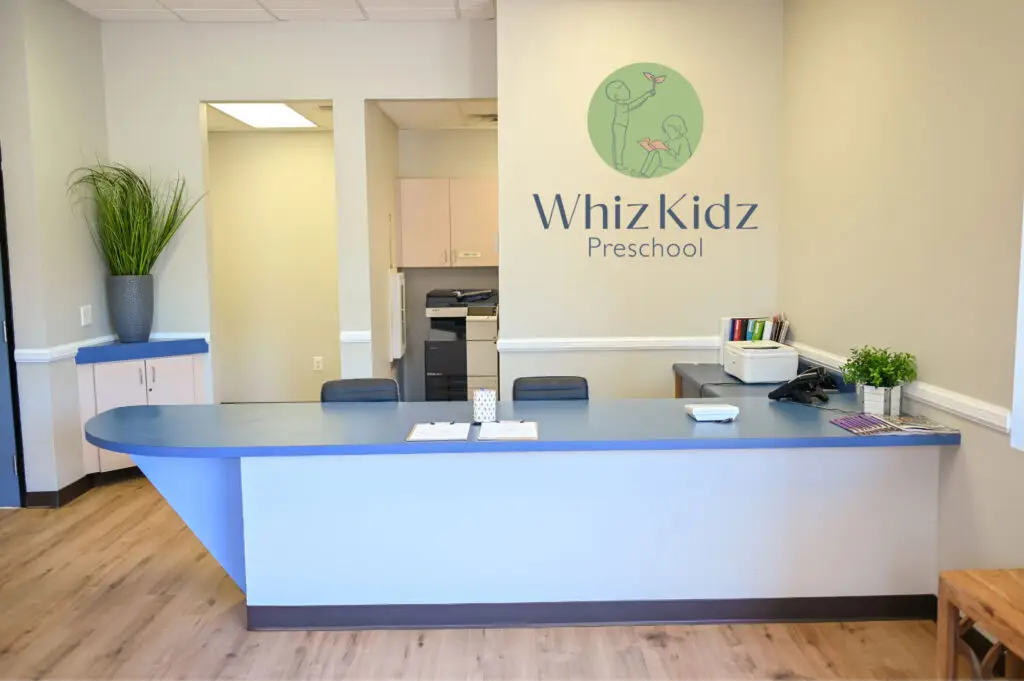
The honest answer is that neither approach is universally better – the right fit depends on your child's temperament, how they engage with new ideas, and what you want their days to look like. STEM-focused programs use teacher-guided activities to build early science, math, and problem-solving skills through structured play. Montessori programs center the child's own pace and curiosity, with mixed-age classrooms and self-directed work as the foundation. Whiz Kidz Preschool uses a STEM and school readiness curriculum designed to build confident learners through joyful, engaging experiences – but understanding both approaches will help you make the call that fits your child right now.
What Does a STEM Preschool Actually Look Like Day to Day?
In a STEM-focused preschool, a teacher typically introduces a concept – how water moves, why a block tower falls, what happens when you mix two colors – and then guides children through hands-on exploration of that idea. The structure is intentional. Teachers plan activities that introduce early science, technology, engineering, and math concepts through play, so children are building vocabulary and observational skills alongside the joy of discovery.
A typical morning might include a group circle where a question is posed ("Why do some things float and others sink?"), followed by small-group experiments, then a creative extension like drawing or building. The day has a rhythm children can anticipate, which many kids find genuinely comforting.
At Whiz Kidz Preschool, that structure is woven through the entire day. One parent described it this way: "I especially appreciate their focus on outdoor time and mental enrichment – reading books, playing with musical toys, and engaging the babies in thoughtful ways throughout the day. It's clear they're intentional about helping little ones learn and grow." That intentionality is the hallmark of a well-run STEM program: curiosity is invited, but it is also supported by a caring teacher who knows where the learning is going.
What Does a Montessori Classroom Look Like in Practice?
Montessori programs are built around the idea that children are naturally driven to learn when given the right environment and the freedom to move through it at their own pace. Classrooms are typically mixed-age, and children choose their own work from a prepared set of materials. A teacher – called a guide – observes, introduces new materials when a child is ready, and steps back.
The University of Wisconsin – Milwaukee notes that Montessori education is well known for its hands-on, student-directed approach to learning, and that carefully planned STEM activities can improve the Montessori classroom environment for children ages 3 to 6. STEM thinking and Montessori philosophy are not opposites. Some Montessori programs do incorporate STEM materials; the difference is in who initiates and who guides.
For a child who is deeply self-motivated, comfortable working independently, and thrives with open-ended time, a Montessori environment can be a remarkable fit. For a child who needs more support, clearer transitions, or a warm adult presence to feel settled, the less-structured format can feel unmooring rather than freeing.
How Do the Two Approaches Compare on Key Factors?
The table below maps the most practical differences parents weigh when comparing preschools and trying to find real differences.
| Factor | STEM-Focused Program | Montessori Program |
|---|---|---|
| Learning initiation | Teacher-guided with child participation | Child-directed with teacher as observer |
| Classroom structure | Scheduled, predictable daily rhythm | Open work periods, child chooses activity |
| Age grouping | Typically same-age peers | Mixed-age |
| Academic framing | Explicit early math, science, literacy | Embedded in materials, self-paced |
| Teacher role | Active guide and co-explorer | Prepared environment, observational guide |
| Transition to kindergarten | Often explicitly school-readiness focused | Readiness built through independence and focus |
The most important takeaway: neither column is better in the abstract. A child who lights up when a teacher poses a question and rallies the group to solve it together will likely flourish in a STEM-structured environment. A child who needs to work at their own pace without peer pressure will often do better with Montessori's self-directed model.
Which Approach Fits Which Child – and Which Family?
This is the question that actually matters. Research offers some useful signals. A national randomized controlled trial published in PMC found that structured early learning environments produced significantly better end-of-kindergarten outcomes for reading, short-term memory, executive function, and social understanding – though program quality and implementation matter enormously alongside any model. Separately, a study published in DergiPark found significant gains in academic self-esteem among preschool pupils who engaged with Montessori approach-based STEM activities, suggesting the two philosophies can complement each other when thoughtfully combined.
What the research cannot tell you is whether your specific child will feel safe, loved, and genuinely curious in a given classroom. That is where your own observation matters more than any study.
A few honest questions to sit with:
- Does your child settle more easily with a predictable routine, or do they resist being told what comes next? Children who thrive on routine tend to do well in structured STEM programs. Children who chafe at transitions may prefer Montessori's open work periods.
- Does your child seek adult connection and encouragement during learning, or do they prefer to work things out independently? STEM classrooms tend to involve more teacher-led interaction; Montessori classrooms reward self-reliance.
- What does school readiness mean to your family? If your priority is an explicit bridge to kindergarten – building literacy, numeracy, and classroom habits – a STEM and school readiness curriculum addresses that directly. If your priority is deep independence and intrinsic motivation, Montessori's model is built for that goal.
- What does the actual classroom feel like when you visit? Touring and observing is one of the most reliable ways to assess fit. Knowing the questions to ask a preschool before you visit will help you look past the surface and understand how a program actually operates.
One parent who enrolled two children at Whiz Kidz Preschool – one in the PreK program and one in the infant room – put it plainly: "The PreK class provides a foundation to allow a successful transition to K. Ms Lenee and Ms Shelby are great in being caring but educators in the same breath." That combination – genuine warmth alongside real educational intention – is what families are often searching for when they start comparing models.
So How Do You Make the Final Call?
The label matters less than the lived experience inside the classroom. A well-run STEM preschool and a well-run Montessori program can both produce joyful, curious, confident learners. A poorly run version of either can undermine a child's sense of safety and belonging. Visit both. Watch how teachers respond when a child is frustrated, how transitions are handled, whether children look settled and engaged, and whether the environment feels warm rather than institutional.
For families who want a structured, accredited program where STEM exploration and school readiness are woven into every day – and where care is genuinely all-inclusive, covering meals, snacks, extracurricular classes, and up to ten hours of care – the Whiz Kidz Preschool STEM and school readiness curriculum is worth a close look. The goal is the same one every thoughtful parent holds: a place where childhood is filled with curiosity, wonder, and belonging.
If you have questions about whether Whiz Kidz Preschool is the right fit for your child, reach out directly. Call (480) 690-3269 or email info@wkpreschool.com – the team is glad to answer honestly and help you figure out what your child actually needs.
FAQ
Which type of preschool is better for preparing kids for kindergarten in 2026?
Both STEM-focused and Montessori programs can prepare children for kindergarten, but they do it differently. STEM and school readiness programs typically build explicit literacy, numeracy, and classroom habits that mirror what kindergarten teachers expect. Montessori programs build independence and intrinsic motivation, which also serve children well. A national randomized controlled trial published in PMC found that structured early learning environments produced significantly better end-of-kindergarten outcomes for reading, short-term memory, and executive function – though the quality of implementation matters as much as the model itself.
Who does well in a Montessori program versus a STEM preschool?
Children who are highly self-motivated, comfortable working independently, and who resist being directed by adults often thrive in Montessori environments. Children who settle more easily with a predictable schedule, who seek teacher encouragement during learning, or who benefit from explicit skill-building tend to do well in structured STEM programs. Temperament is the most reliable guide – more reliable than any ranking of the two models in the abstract.
Which approach costs more – STEM preschool or Montessori?
Cost varies significantly based on location, accreditation, staffing ratios, and what is included in tuition. Some Montessori programs charge separately for materials, meals, or extended hours. When comparing programs, it is worth asking what is included in the base tuition and what is billed separately, since an all-inclusive program that covers meals, snacks, diapers, and extracurricular classes may cost less in practice than a program with a lower headline rate and multiple add-on fees.
Where can I observe a STEM preschool classroom before enrolling?
Most quality preschools, including STEM-focused programs, welcome prospective families for a tour and classroom observation. Visiting in person is one of the most reliable ways to assess whether the environment matches what your child needs – you can watch how teachers handle transitions, how children engage with materials, and whether the classroom feels warm and settled. Calling ahead to schedule a tour is the standard first step; it also gives you the chance to ask specific questions about curriculum, staffing ratios, and daily routines.
Which program is better for a child who struggles with transitions?
Children who find transitions difficult often do better in environments with a clear, predictable daily rhythm – which is more characteristic of structured STEM programs than of Montessori's open work periods. In a STEM classroom, children typically know what comes next, and teachers actively support movement from one activity to another. In a Montessori classroom, children have more autonomy over when they shift activities, which can feel freeing for some children and unsettling for others who need more external support.